

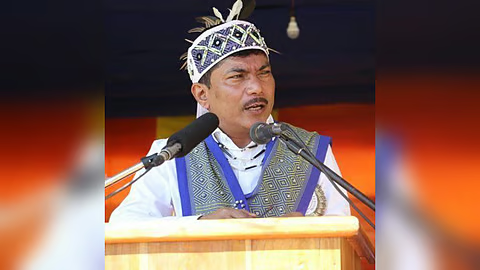
Former Meghalaya Minister Zenith Sangma has officially rejoined the Indian National Congress (INC), marking a significant political shift in the state. This development was confirmed on Wednesday, following Zenith Sangma’s resignation from the All India Trinamool Congress (AITC), where he served as the vice-president of the Meghalaya unit.
Zenith Sangma, younger brother of former Chief Minister Dr. Mukul Sangma, submitted his resignation from the TMC on October 27, 2025, citing a desire to start “a new chapter” that aligns with his vision for the people he serves. In his resignation letter, Sangma expressed gratitude for his experiences with the TMC but stated that it was time to move on. His formal return to the Congress was welcomed by senior party leaders in Meghalaya and the All India Congress Committee (AICC), which had approved his re-entry into the party.
This move is seen as a strategic boost for the Congress party in Meghalaya, especially in the politically sensitive Garo Hills region, where Zenith Sangma has strong influence. Political analysts suggest that his return strengthens the Congress’s position as a key opposition force in the state and could consolidate the vote bank ahead of the upcoming assembly elections scheduled for 2028. This shift also exposes internal challenges within the Meghalaya TMC, which has faced organizational difficulties and defections in recent times.
Upon rejoining Congress, Zenith Sangma reiterated his commitment to public service and his intent to work towards the development and welfare of the people. His political journey started with the Congress, where he had served as a minister in previous state governments before moving to the TMC in 2021 along with his brother and several lawmakers.
The Congress leadership warmly welcomed Zenith’s return, highlighting the party’s openness to leaders who align with its values and vision. The reintegration of Zenith Sangma is expected to strengthen the party’s grassroots presence in Meghalaya, enabling it to better challenge the ruling coalition in the state.
Zenith Sangma’s move is also being interpreted by political commentators as part of broader realignments in Northeast Indian politics. It underscores the fluid nature of party loyalties in Meghalaya and signals potential shifts leading up to the next electoral cycle. The Congress is optimistic that this development will help reclaim lost ground and rejuvenate its political fortunes in the region.
The Meghalaya political scene is now closely watching how other leaders might respond to this switch and whether it will prompt further changes ahead of the crucial elections. Zenith Sangma’s rejoining of Congress has injected fresh momentum into the party, setting the stage for intensified political activity in Meghalaya in the coming months.
This update forms a significant chapter in Meghalaya’s political narrative, reflecting evolving dynamics and the ongoing contest for influence among regional and national parties. Zenith Sangma’s return to Congress after a brief stint with the TMC marks a notable reconfiguration that could shape the state’s political landscape.







Leave a Reply