

The anti-Citizenship Amendment Act (CAA) protests of December 2019 remain one of the most turbulent periods in Assam’s recent history, with widespread demonstrations, curfews, arson and clashes breaking out across several parts of the state following the passage of the Citizenship Amendment Bill in Parliament.Amid the escalating unrest, senior IPS officer Gyanendra Pratap Singh (G.P. Singh) was brought back to Assam from New Delhi on an urgent basis by the Ministry of Home Affairs to help restore law and order.
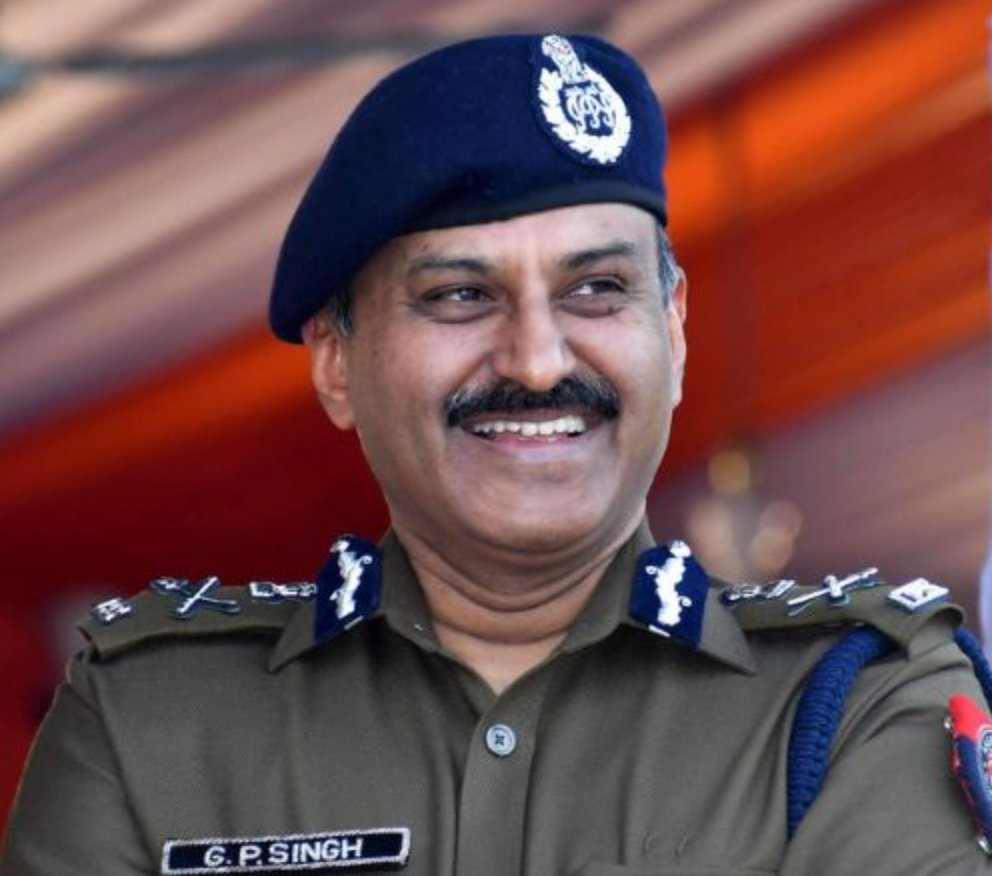
At the time, Singh was serving on central deputation with the National Investigation Agency (NIA). As protests intensified across Assam, he was reportedly flown to Guwahati on a special flight during the night of December 11-12, 2019, and was entrusted with overseeing the Law and Order wing of Assam Police at a critical juncture.
The state was witnessing one of its most volatile phases in decades. Public anger against the Citizenship Amendment Act had spilled onto the streets, with large-scale protests, road blockades and incidents of vandalism reported from multiple districts.
Upon taking charge, Singh adopted a two-pronged strategy that combined a strong security response with continuous engagement with community leaders, civil society groups and protest organisers.
He repeatedly appealed to people to express their concerns through peaceful and constitutional means while warning against violence, destruction of public property and disruption of essential services. Assam Police also issued strong warnings that losses caused by vandalism and enforced shutdowns could be recovered from those responsible for organising violent protests.
During the period, Singh advocated the use of visible and adequate deployment of security personnel as a deterrent against violence. He argued that a strong police presence could help prevent escalation and minimise the need for the use of force.Officials familiar with the operations say that alongside security measures, efforts were made to maintain communication with various stakeholders to prevent further deterioration of the situation.
The approach helped restore normalcy within a relatively short period, allowing the administration to gradually lift restrictions and resume normal public life. The restoration of law and order marked the beginning of a more stable phase for Assam after days of uncertainty and unrest.
The protests had also coincided with preparations for the proposed India-Japan summit between Prime Minister Narendra Modi and then Japanese Prime Minister Shinzo Abe, which was scheduled to be held in Guwahati in December 2019. The summit was eventually postponed due to the prevailing situation.Nearly seven years later, Assam is preparing to host the India-Japan summit in 2026, a development many observers view as symbolic of the state’s transformation from a period of unrest to one increasingly associated with stability, investment and international engagement.
G.P. Singh would later go on to serve as Director General of Police of Assam before being appointed Director General of the Central Reserve Police Force (CRPF), with his tenure in Assam marked by initiatives ranging from counter-insurgency and anti-poaching operations to campaigns against child marriage and organised crime.
For many observers, his role during the anti-CAA unrest remains one of the defining moments of his policing career, when he was tasked with steering Assam through one of its most challenging law-and-order crises in recent years.





Leave a Reply